- The Better Listener
- Posts
- A Meditation on The End of Things
A Meditation on The End of Things
For you, the person in the thick of it.

Orly Israel
December 30, 2025
Last night, I saw a movie with an impressively sad friend.
The bummed man was wholly and not so delicately heartbroken, suffering the painful consequences of his own decisions that he desperately wishes he could undo.
He in the middle of a heart-related text conversation as we enter the theater.
Suddenly - green text.

Gasp.
Him: “Did she block me? She blocked me. The messages aren’t going through.”
Me: “You don’t have reception. That’s why it’s green.”
The movie starts, but he’s not watching. He’s itching for clarity.
I’d seen the movie once before, so I tell him he won’t miss anything if he leaves for a few minutes to find reception.
He goes and comes back.
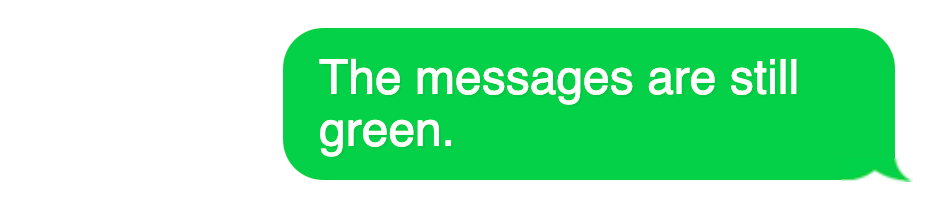
Him: “She blocked me.”
Me: “She probably doesn’t have reception.”
Our perspectives silently clash. The movie runs its course.
We leave the theater.
Me: “What’d you like about the movie?”
Him: “To be honest, I wasn’t really watching.”
He was thinking about her the whole time.
Crushed under the devastating weight of being blocked.
We sit down at a table a short walk from the theater.
He sends another text.
Blue.
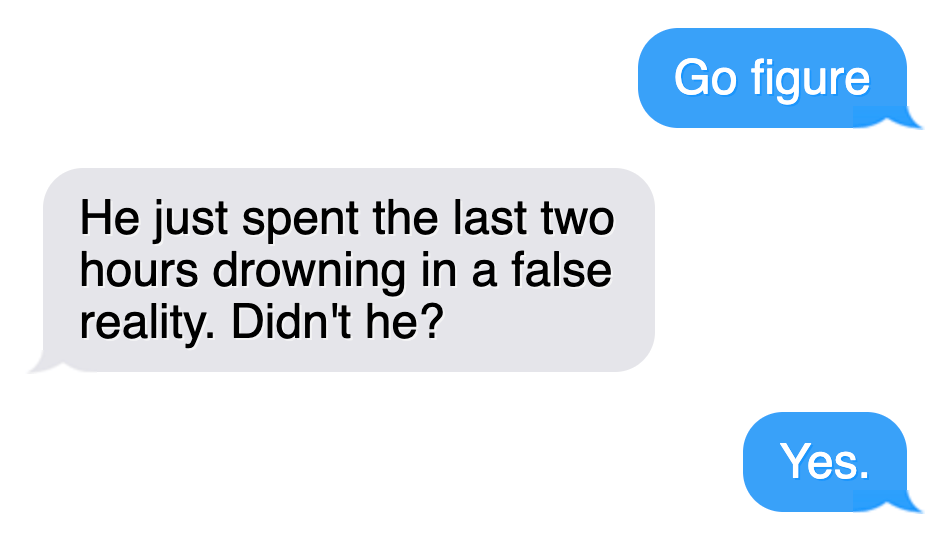
So what?
Consider the decisions you’ve made for yourself about futures undefined.
“It’s not going to work.”
“They’re going to hate it.”
“I’m going to look bad.”
Who’s to say?
My friend isn’t alone in this. I’m just as guilty of being down on undefined situations.
I think many of my speeches are terrible.
Audience members still come up to me afterwords telling me otherwise.
Many readers respond to these emails with meaningful appreciation, or meaningful criticism - like Derick, who doesn’t like when the emails come in at night.
The work is in being bold enough to ask this one question:
What if I’m wrong?
Think about all the bad futures you’re carrying.
And ask.
Onward to 2026,
O